

Parents Don't Need Another Portal. They Need a Signal.
Parents are drowning in school apps and fragmented data. The next generation of parent dashboards should prioritize signals, not more portals.
By Remix Academics Research
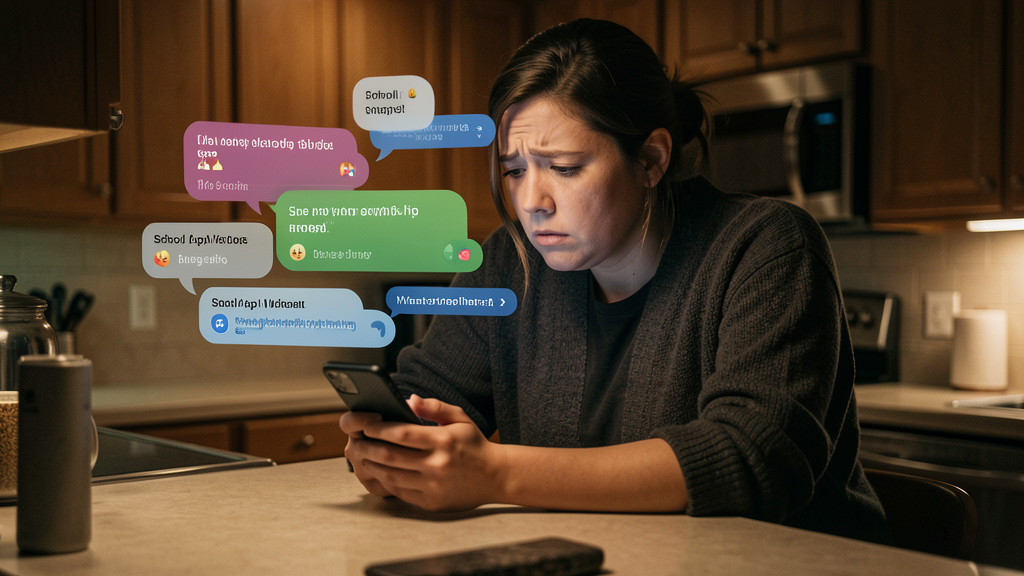
If you have a school-age child right now, count the apps on your phone related to their education. The gradebook portal. The LMS where teachers post assignments. The behavior tracking platform. The lunch account. The district communication app. The automated attendance text. The classroom newsletter that comes as a PDF.
Now ask yourself: how often do you actually know what is going on with your child's learning?
More Data Is Not the Same as More Clarity
The promise of edtech over the last decade was transparency. Parents would be more connected. Communication would improve. Families would have more insight into what was happening in the classroom.
What happened instead was fragmentation. Each platform was built to solve a specific problem and delivered in a silo. No one designed the system from the parent's side of the experience. No one asked what a parent actually needs to know on a Tuesday night with forty minutes to spare.
The result is a lot of noise disguised as information.
What Parents Are Actually Asking
When a parent opens a school app, they are not trying to analyze data. They are trying to answer a small set of very practical questions.
Is my child okay? Not just academically. Are they showing up? Are they engaged? Is something going on?
What needs my attention right now? Not a list of everything. The two or three things that actually matter this week.
What can I do tonight? A specific, actionable thing that fits in a real evening with dinner, homework, and a bedtime.
What should I ask the teacher? Because most parents want to support the classroom relationship, not undermine it.
What can wait? Permission to not act on everything at once.
A good parent dashboard answers those five questions in under two minutes. Most current systems require a parent to synthesize information across four platforms to get close to any of them.
The Risk of AI That Adds Noise Instead of Removing It
AI is entering the parent-school communication space quickly. The pitch is personalization. But personalization without synthesis is just a more targeted version of the same problem. Sending a parent a custom-generated summary of everything that happened this week is not useful if the parent cannot tell what matters.
The design question for AI in school communication is not "how do we send more relevant information?" It is "how do we help parents triage faster and act smarter?"
Those are different questions and they lead to different products.
What a Real Signal Looks Like
A signal is not a summary. A signal is a prioritized answer to "what matters right now."
It sounds like: your child has not submitted two assignments in the same subject over the same two weeks. That is a pattern worth a five-minute conversation.
It sounds like: your child's quiz scores improved this month but participation in class dropped. Something might be going on socially.
It sounds like: next week has a major assessment. Here are two practice moves you can do at home this weekend.
That kind of communication requires someone or something to interpret the data before it reaches the parent. Not just surface it. Interpret it.
Schools that get this right will earn trust. The ones that keep adding portals will keep losing parents to learned helplessness.
Remix on This
This is exactly the problem Remix Academics is built to solve for homeschool and hybrid families. The parent dashboard in Mixtape360 is not a data dump. It is a command center designed around what a parent needs to know now, what can wait, and what to do next. The system does the interpretation so the parent can do the relationship.
That is what parent support should look like. Fewer portals. Clearer signals.
Related Remix Guides
AI Tools for Homeschool and Hybrid Learning Families
A practical guide to using AI tools in homeschool and hybrid learning with parent oversight, privacy awareness, bias checks, and human support.
Homeschool Pods and Microschools for Diverse Families
A guide to homeschool pods, microschools, co-ops, and small learning communities for diverse families considering flexible education models.
Homeschool Attendance Records: What to Track
A practical guide to homeschool attendance records, portfolios, progress notes, review dates, and source checks for families.
Turn the signal into action
Discuss This With the SEAT Squad.
The Remix Report tracks the shift. SEAT Squad is where families, teachers, and tutors turn it into questions, referrals, support, and better learning decisions.
Related Articles
An Indigenous Pedagogy Primer every homeschool family should read
A framework from Māori and First Nations traditions that centers learning as relational before it is informational.
guideMeet the Washingtons: building a learning OS from a Baltimore rowhouse
One household. Three kids. One learning architect. A real family figuring it out in real time.
guideAI Literacy Without Outsourcing Thinking: The New Family Skill
The 2026 AI literacy conversation is landing on one clear principle: kids need to learn AI, but they also need deliberate practice in thinking without it.