Small-Batch Education Is Having a Moment. Here's What Parents Should Watch For.
Microschools, pods, co-ops, and hybrid programs are growing. Families need to know what quality looks like when education gets smaller and more flexible.
By Remix Academics Research
Something is happening in education that the mainstream conversation is slow to name clearly. Small is becoming a feature, not a limitation.
Microschools, learning pods, co-ops, and hybrid programs are growing. The reasons are not hard to understand. Smaller environments adapt faster, know students better, and can build a culture that a 400-person school struggles to replicate. The question for families is not whether these models are valid. They clearly are. The question is what to look for and what to watch out for.
What Is Actually Driving the Growth
A few forces are converging at once. State-level education savings accounts are making small learning environments financially accessible to families who could not afford private school or full homeschooling. AI tools are making it operationally feasible for small programs to deliver quality instruction without large staff. And pandemic-era flexibility normalized the idea that school does not have to mean a specific building at a specific time.
The families driving this growth are not all the same. Some are ideologically motivated. Some are pragmatic. Some are responding to specific failures in the traditional system. A child who was bullied without intervention. A child with a learning difference who was passed through without support. A child whose curriculum never reflected their culture or community.
Each of those is a different reason, and each one points to something the small-batch model has the potential to address.
What Makes a Small Learning Environment Actually Good
Small is not automatically better. Small can also mean unaccountable, undertrained, and underfunded. A microschool run by well-meaning people without pedagogical depth can leave significant gaps. A learning pod that is really just a playdate with a curriculum label is not providing education.
The markers of a quality small learning environment are specific. Strong academic scope and sequence, even if the delivery is flexible. Clear documentation of what a student covers and what they demonstrate. Adult facilitators who can recognize skill gaps and respond to them. Social structures that prevent isolation and build genuine peer community. And some form of accountability that is not just the parent's gut feeling.
The best small programs are intentional about all of this. They also know what they are not. A microschool that is honest about not offering advanced science lab work and connects families to other resources for that is more trustworthy than one that oversells its coverage.
The Belonging Question Nobody Is Asking Loudly Enough
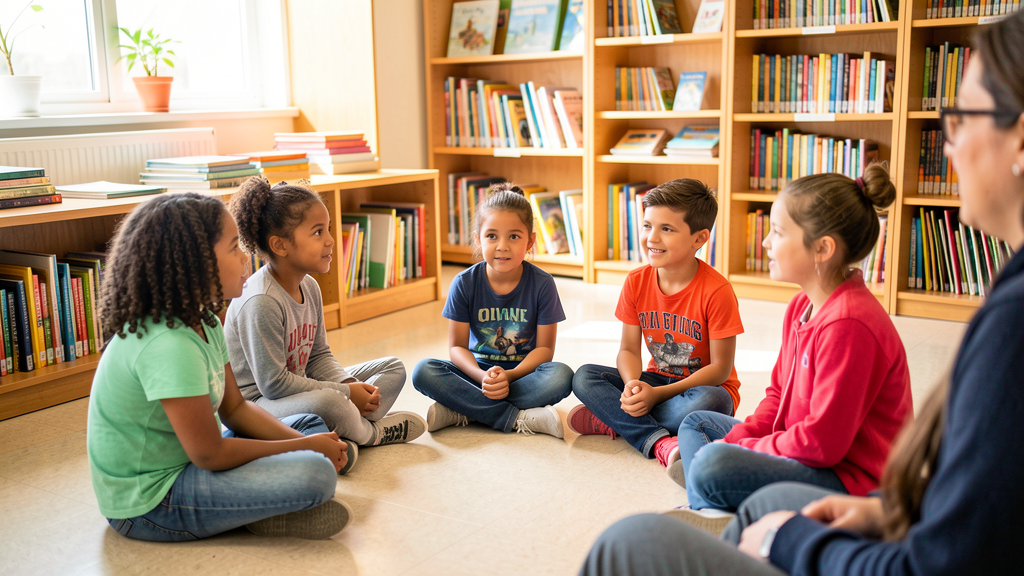
Small learning environments can be extraordinary for belonging. A child who is one of eight students in a co-op is known in a way that a child in a 30-student classroom often is not. The adult-to-student ratio creates relationship density that changes everything about the learning experience.
But small can also mean homogeneous. And homogeneous can mean a child grows up in a bubble that does not prepare them for a diverse world.
The best small-batch models are intentional about building genuine community, not just a comfortable enclave. They create spaces where different kinds of kids belong, not just kids who fit one profile. That design choice matters as much as the curriculum.
The Future Is Probably Plural
This is not a story about small education replacing traditional schools. Most children will continue to attend traditional schools, and those schools are worth improving. But the rise of small-batch education is a signal. It is telling us what families need that large systems are having trouble delivering: flexibility, visibility, belonging, and cultural fit.
The education landscape of the next decade will probably include all of it. The families who know how to evaluate quality in every environment will have the most options.
Related Remix Guides
Homeschool Pods and Microschools for Diverse Families
A guide to homeschool pods, microschools, co-ops, and small learning communities for diverse families considering flexible education models.
Hybrid Homeschool Programs: How to Compare Options
Compare hybrid homeschool programs by schedule, instruction, records, cost, community, student support, and parent responsibility.
Culturally Responsive Homeschool Curriculum Checklist
A practical checklist for families evaluating culturally responsive homeschool curriculum, identity-affirming materials, and academic rigor.
Turn the signal into action
Discuss This With the SEAT Squad.
The Remix Report tracks the shift. SEAT Squad is where families, teachers, and tutors turn it into questions, referrals, support, and better learning decisions.
Related Articles
Black-owned edtech is having a moment
Black-led platforms centering culturally responsive curriculum move from supplemental to core in family learning stacks.
trendThe AI Is Already In the Building. The Question Is Whose Building?
Schools are racing to add AI to their classrooms. Families who take the wheel first won't be waiting for that race to end.
trendThe study nobody covered: isolation is the variable, not the method
UW research finds homeschool outcomes depend on community interaction, not the educational method itself.