

What Parents Should Ask Before Accepting a School Wi-Fi Hotspot or Laptop
Before a school sends home a hotspot or filtered device, parents should ask what learning problem it solves, what data it tracks, and how they will know it actually helps.
By Remix Academics Research
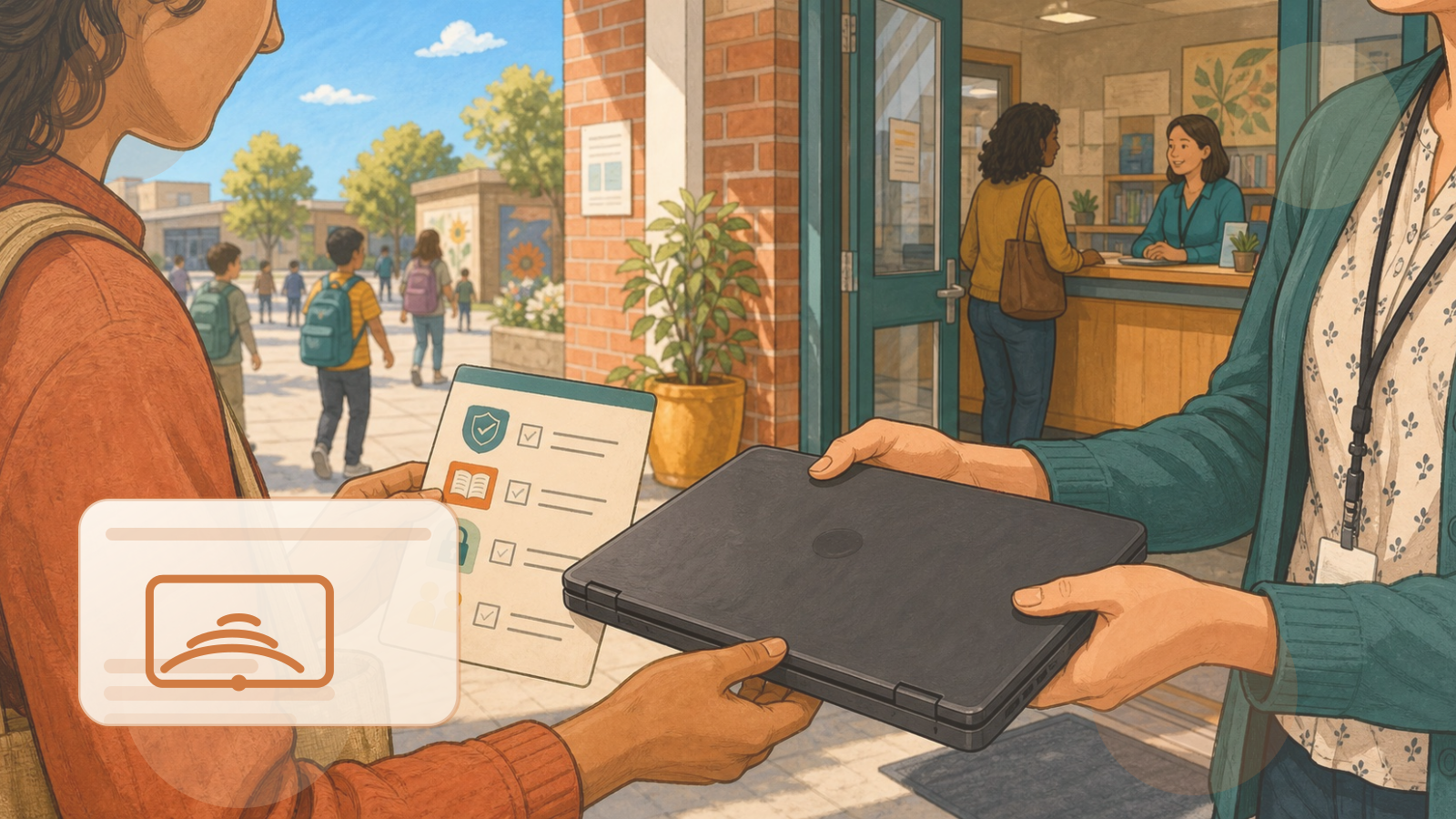
# What Parents Should Ask Before Accepting a School Wi-Fi Hotspot or Laptop
School technology is not just a Chromebook conversation anymore.
On June 25, 2026, the Federal Communications Commission is scheduled to consider a proposed review of E-Rate, the federal program that helps schools and libraries pay for internet access and related network services. The proposal asks a simple but uncomfortable question: are E-Rate-funded networks being used in ways that actually serve educational purposes and protect children?
That matters because many parents have been stuck in the wrong argument. One side says, "Kids need technology." Another side says, "Kids need less screen time." Both can be true, and neither one gives a parent enough information.
The better question is: what is this school technology supposed to do for my child, and how will I know if it is working?
That is the learning receipt.
What should a school Wi-Fi or device learning receipt include?
A school network receipt does not need to be hostile or complicated. It can start with five plain questions.
First, what is the educational purpose? If a class uses a device, app, AI tool, dashboard, or online platform, the school should be able to name the learning job. Practice? Research? Feedback? Collaboration? Accessibility? Assessment?
Second, how much time does it require? Parents cannot set sane home boundaries if school screen time is invisible. A rough estimate is better than a mystery.
Third, where is the human judgment? If software gives feedback, grades, recommendations, flags, or AI-generated help, a parent should know where the teacher reviews, adjusts, or overrides the tool.
Fourth, what can the child do without the tool? This is not anti-tech. It is basic learning. A student should be able to show some part of the skill away from the screen, whether that means explaining the math, annotating a passage, sketching a plan, or talking through a draft.
Fifth, what data or evidence shows the tool helps? The answer does not have to be a perfect study. It can be classroom evidence, teacher observation, student work samples, or a clear reason the tool stayed in the plan.
Why do school hotspots and take-home devices matter for families?
Families outside the default already know that access is not the same thing as support. A portal is not a plan. A device is not a teacher. A fast answer is not always understanding.
For Black, Brown, neurodivergent, disabled, immigrant, LGBTQ+, faith-minority, homeschool, hybrid, and traditional-school families, the issue is not whether technology exists. It is whether the adults around the child can explain the purpose, protect the child's dignity, and keep learning from becoming a blur of logins.
That is the move for the next school year. Do not walk into the fall asking only, "Can my child opt out?" Ask, "Can you show me the learning receipt?"
What should parents do before the next device comes home?
Before fall, ask your school for the learning receipt: purpose, time, human judgment, no-screen proof, and evidence. If you need help turning that into a calm email or meeting question, bring it to Ask Tendi or the SEAT Squad.
Questions Parents Ask ChatGPT About This Issue
### What should parents ask before accepting a school hotspot or laptop?
Ask what job the device does, what filtering and monitoring are active, what data is collected, and how the school will measure whether the device improves learning.
### Do school Wi-Fi hotspots help every student equally?
Not automatically. A device can improve access, but families still need teacher support, assignment clarity, and a plan for how the tool fits actual schoolwork at home.
### What is a learning receipt for school technology?
A learning receipt explains the purpose of the device, the support attached to it, the privacy rules, and the evidence parents should expect if the tool is truly helping.
FACT-CHECK
The FCC's June 4, 2026 fact sheet says the proposed E-Rate Notice of Proposed Rulemaking would seek comment on whether the program should be narrowed or reoriented, whether E-Rate-funded networks are being used for educational purposes, how to advance student learning outcomes, how to better protect children online, and how to empower parents, guardians, and teachers around children's access to E-Rate-funded networks and services. The circulated draft also states that it is not final Commission action and remains subject to change before adoption.
Related Remix Guides
AI Tools for Homeschool and Hybrid Learning Families
A practical guide to using AI tools in homeschool and hybrid learning with parent oversight, privacy awareness, bias checks, and human support.
Hybrid Homeschool Programs: How to Compare Options
Compare hybrid homeschool programs by schedule, instruction, records, cost, community, student support, and parent responsibility.
Homeschool Pods and Microschools for Diverse Families
A guide to homeschool pods, microschools, co-ops, and small learning communities for diverse families considering flexible education models.
Turn the signal into action
Discuss This With the SEAT Squad.
The Remix Report tracks the shift. SEAT Squad is where families, teachers, and tutors turn it into questions, referrals, support, and better learning decisions.
Related Articles
Black-owned edtech is having a moment
Black-led platforms centering culturally responsive curriculum move from supplemental to core in family learning stacks.
trendThe AI Is Already In the Building. The Question Is Whose Building?
Schools are racing to add AI to their classrooms. Families who take the wheel first won't be waiting for that race to end.
trendThe study nobody covered: isolation is the variable, not the method
UW research finds homeschool outcomes depend on community interaction, not the educational method itself.